



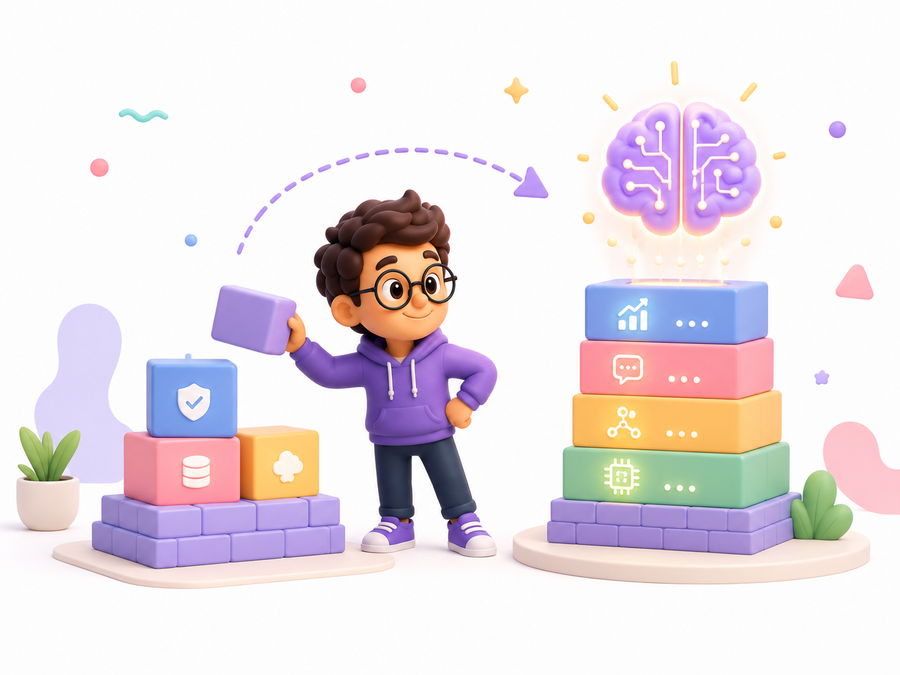
Build the foundation. Then build the intelligence.
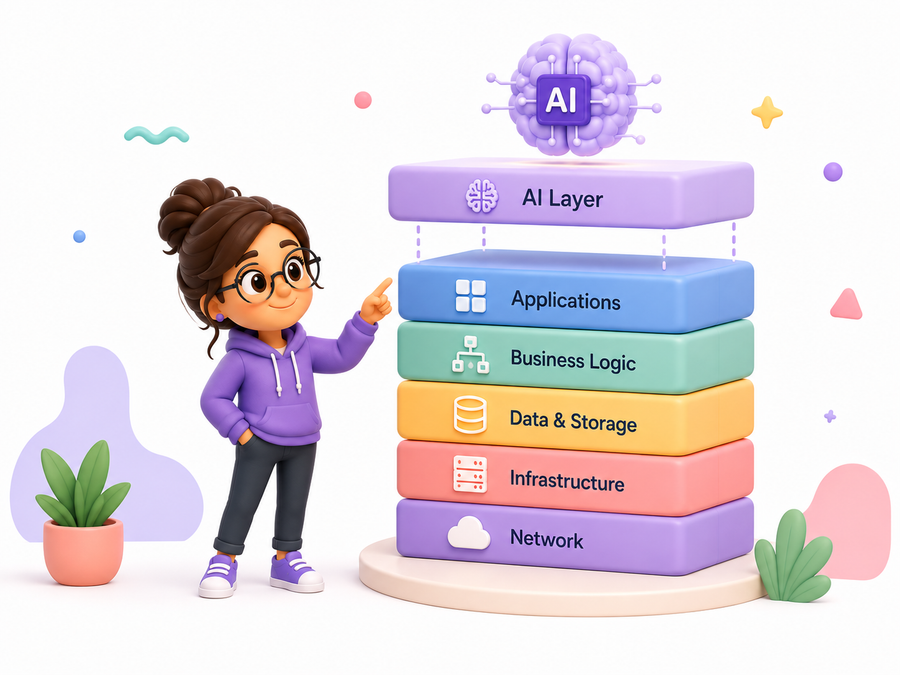
We approach technology as a connected system. The application layer, data layer, AI layer, infrastructure, and security model need to work together.
AI is a layer. Not the whole system.
Intelligent applications only work when applications, data, orchestration, infrastructure, and security are designed as one connected system — not as isolated projects.
- Applications that people actually use
- Data and knowledge foundations
- Infrastructure
- Security


Engineering capabilities for intelligent systems
Six connected disciplines that turn architecture into reliable, production-ready technology.

Software Engineering
Design and build reliable software products and platforms across web, mobile, backend, APIs, microservices, and enterprise applications.

Cloud & DevOps
Build cloud infrastructure and engineering practices that support reliable deployment, scalability, security, and operational visibility.

Data Engineering
Create the reliable data foundations and pipelines required for analytics, automation, AI, and trusted operational intelligence.

APIs & Integration
Connect applications, AI systems, enterprise platforms, and third-party services so information and actions can move across the organization.
Platform Engineering
Create reusable infrastructure, deployment patterns, developer platforms, and operational foundations that help teams ship reliably.
Cybersecurity
Security should be part of architecture from the beginning rather than an afterthought across identity, data, and operations.
Technology should serve the problem.
We select technologies based on requirements such as performance, maintainability, security, scalability, delivery speed, and cost.
Integration connects intelligence to the systems your business already runs — APIs, events, and data flows that keep information moving.
Explore the stack by discipline

AI / ML
Orchestration, retrieval, and model serving for production intelligent applications.
- LLM orchestration
- Retrieval systems
- Model serving
- Evaluation pipelines

Cloud
Platforms selected for performance, compliance, and operational fit — not defaults.
- AWS
- Azure
- Google Cloud
- Hybrid architectures

Backend
APIs, microservices, and enterprise integrations that connect systems reliably.
- APIs
- Microservices
- Event-driven systems
- Enterprise integrations

Frontend
Web, mobile, and embedded experiences that make complex systems usable.
- Web applications
- Mobile experiences
- Admin consoles
- Embedded interfaces
Data
Pipelines, warehouses, lakes, and analytics foundations for operational intelligence.
- Pipelines
- Warehouses
- Lakes
- Streaming
- Analytics
Infrastructure
Containers, orchestration, serverless, and networking built for scale.
- Containers
- Kubernetes
- Serverless
- Networking
DevOps
CI/CD, infrastructure as code, observability, and release automation.
- CI/CD
- Infrastructure as Code
- Observability
- Release automation
Security
Identity, encryption, secure engineering practices, and AI-specific controls.
- Identity & access
- Encryption
- Secure SDLC
- AI security controls
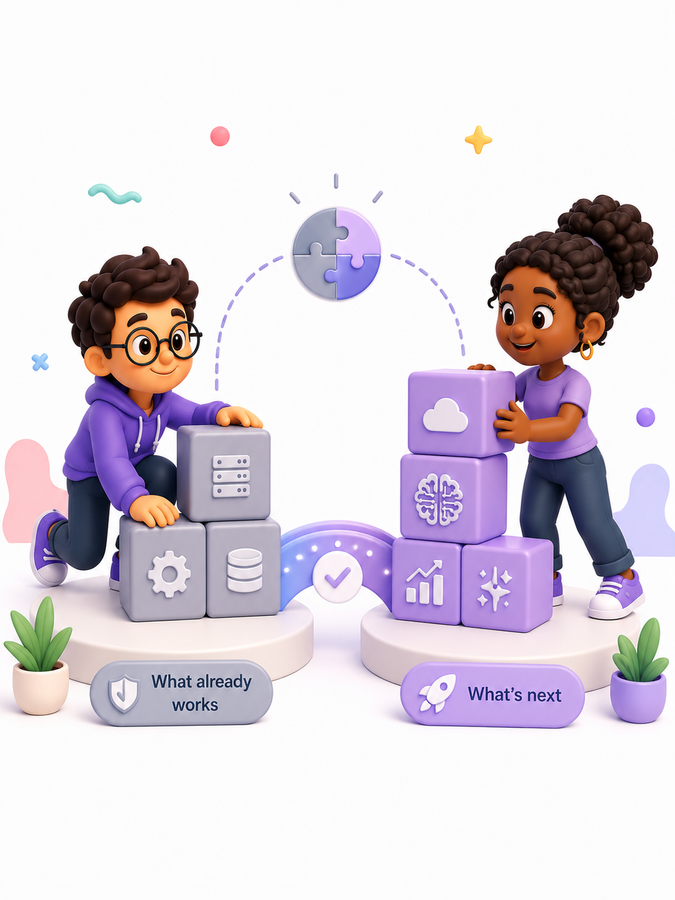
Modernize without losing what already works.
Legacy systems often contain critical business knowledge and workflows. Modernization does not always mean replacing everything. We can help assess existing architecture, identify bottlenecks, modernize components, expose APIs, migrate workloads, improve data foundations, and introduce AI where it creates meaningful value.